
How schools build belonging and help our children thrive

From NAHT
Paul Whiteman from NAHT writes a blog for Children's Mental Health Week all around how schools can build belonging and help our children thrive.
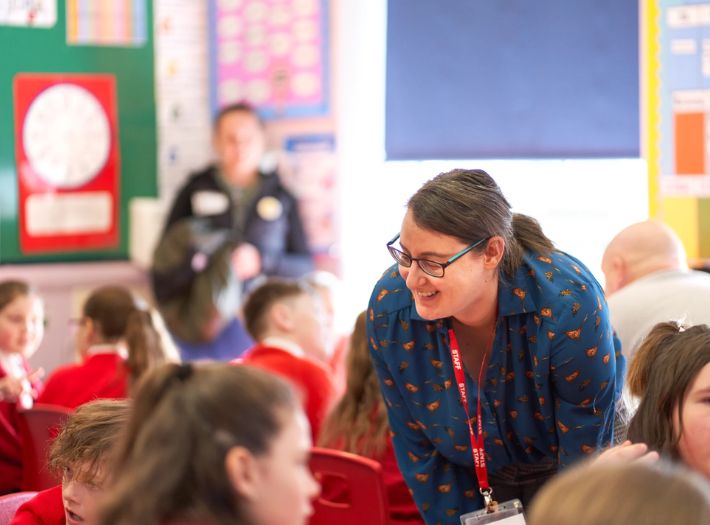
Belonging is a fundamental human need, and in school it plays a vital role in shaping children’s wellbeing, confidence, and ability to thrive. Schools are far more than places of academic learning; they are communities where pupils should feel safe, valued, and understood. When children experience a strong sense of belonging at school, they are more likely to engage positively with learning, build healthy relationships, and develop resilience that supports both their academic progress and their mental health.
School leaders work intentionally to create cultures where belonging is actively encouraged. This begins with a shared vision that places inclusion, respect, and care at the heart of school life. Whole-school approaches are used to ensure that every pupil feels welcome, from clear values that are consistently modelled by staff, to policies that promote kindness, equity, and mutual respect. These approaches help establish an environment where differences are celebrated and where pupils understand that they are an important and valued part of the school community.
A strong focus on wellbeing underpins this sense of belonging. Many schools embed wellbeing initiatives into daily practice, recognising that children’s mental health is closely linked to how safe and supported they feel. By normalising conversations around mental health, schools help reduce stigma and empower children to seek support when they need it. All school staff play a key role in noticing changes in behaviour or mood, responding with empathy and care, and ensuring that no child feels overlooked.
Pastoral support is another crucial element in fostering belonging. Schools often go above and beyond to provide targeted support for pupils who may be experiencing challenges, whether social, emotional, or personal. This can include helping pupils to process grief and other significant life events, building self-esteem, and creating a safe school environment. Such measures send a powerful message to pupils: that they are seen, listened to, and supported as individuals.
In addition, schools provide opportunities such as clubs, sports teams, creative groups, and leadership roles which help pupils develop a sense of connection and purpose. These activities allow children to build friendships, discover interests, and feel part of something bigger than themselves. For some pupils, these spaces are where they feel most confident and accepted, strengthening their overall sense of belonging within the school.
Ultimately, when schools prioritise belonging, they create environments in which children can flourish emotionally as well as academically. Through thoughtful leadership, compassionate teaching, and a commitment to wellbeing and mental health, schools become places where pupils feel they truly belong. This sense of belonging not only supports children in the present, but also lays the foundation for positive mental health, improved learning and attainment, and the best possible outcomes for children and young people.