Where do I belong?
Programme Leader for Family Work - Judah is a BACP registered counsellor, and Parent-training Mentor, who joined Place2Be in 2021. He has over 7 years experience delivering counselling and therapeutic services for adults and children. Judah has been supporting parents and carers, delivering parent training and supervising parenting practitioners within local authorities and the NHS for over 17 years.
The official theme for this years Children's Mental Health Week is 'This is My Place'. In this blog, BACP registered counsellor and Parent-training Mentor, Judah has written about what belonging means to him. We've also launched a new Parenting Smart article, 'Helping my child feel they belong' about why belonging is so important to children.
My personal reflections on the topic of belonging didn’t fully come into my awareness until adulthood. Looking back now with more reflective eyes, I can see that I’ve journeyed through ideas around belonging without much acknowledgement along the way.
As a child, I felt my sense of belonging was initially connected to my family, friends, school, the place where I lived, and my community. I played for a local football club, attended cubs and scouts, and had a close-knit group of friends with whom I later made music and formed a band. As I’ve grown older and explored more deeply who I am and where I feel I belong, it has led me to think more about my cultural background and family origins. This eventually took me into researching my ancestry and tracing my DNA back many generations—which was eye-opening, to say the least.
From this, I started to reflect on my children’s experiences with this theme and became curious about what their sense of belonging is currently connected to. So, I asked each of them for their perspectives. I found it very interesting that while they shared some similarities in their feelings about belonging, there were also clear differences.
They all spoke about belonging in relation to our family, close friends, and groups they attend regularly—like the football clubs they play for. However, they each had different feelings about the area we live in. Two of my boys noted that, living outside London, they notice not being around as many people who look like them and feel they’re responded to differently compared to when we visit London, where the cultural mix means they see more people who feel familiar. My oldest son shared that, for him, his sense of belonging is tied only to our home, and not to the local area at all. He even mentioned that he feels more belonging with some players in his football team than others.
I found these reflections from my sons fascinating, especially when compared to my own ideas about belonging. It occurred to me that a common thread for both me and my boys is that belonging started with the close circle of family and friends and then extended outward to the wider community or shared activities like football.
This left me wondering if other people have had similar experiences. I visualised a picture in my mind of the things in our lives that we’re connected to, forming circles around us—circles that grow larger as we move outward from our closest relationships. Our sense of belonging being shaped by these circles, depending on our personal perspectives.
This leaves me reflecting on my role in helping my sons discover and create the spaces where they feel they truly belong. My hope is that their journeys will continue to be shaped by self-discovery and connections that guide them to the places and people that add to their sense of where they belong.
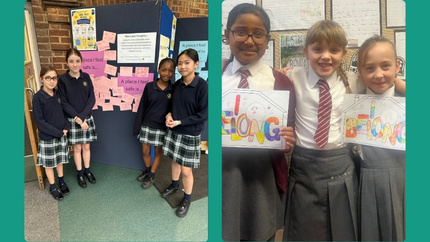
Read about the highlights from Children's Mental Health Week 2026!
Read more
Paul Whiteman from NAHT writes a blog for Children's Mental Health Week all around how schools can build belonging and…
Read more
Marking three years of creative, chortle-fuelled collaboration, BEANO and Place2Be have teamed up again this Children’s Mental Health Week to…
Read more